
Bunny Matthews
Archive
Marketing Architecture
New Orleans, Louisiana
Overview
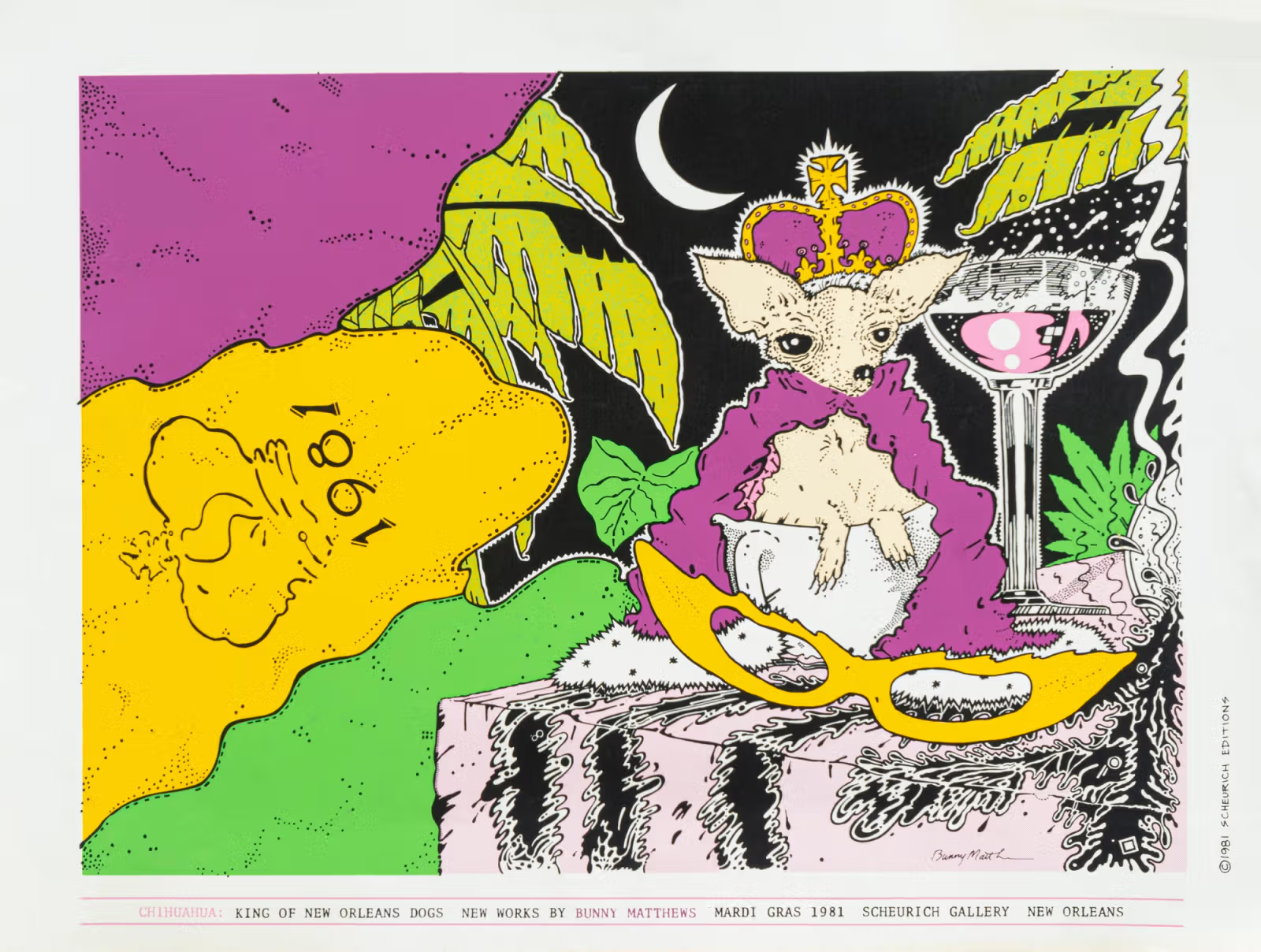
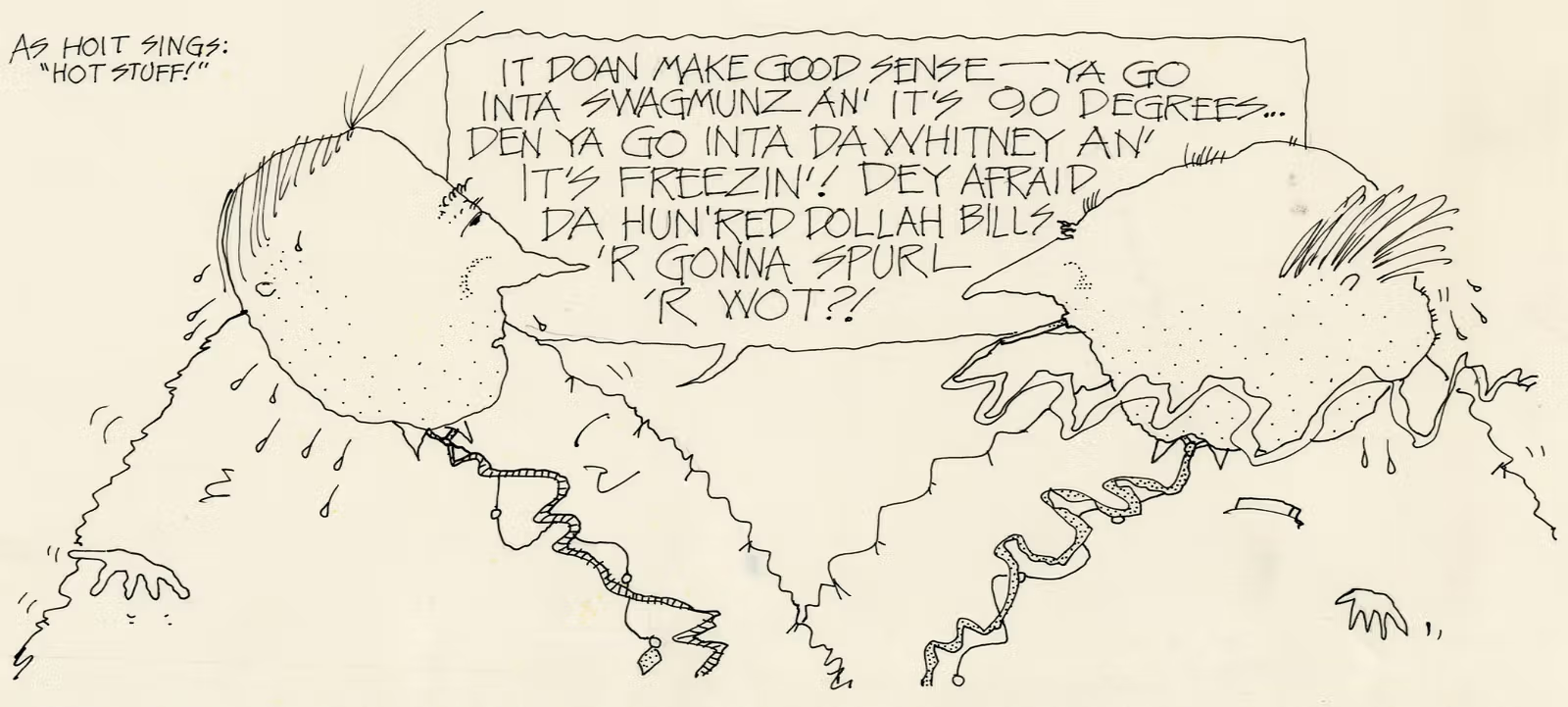
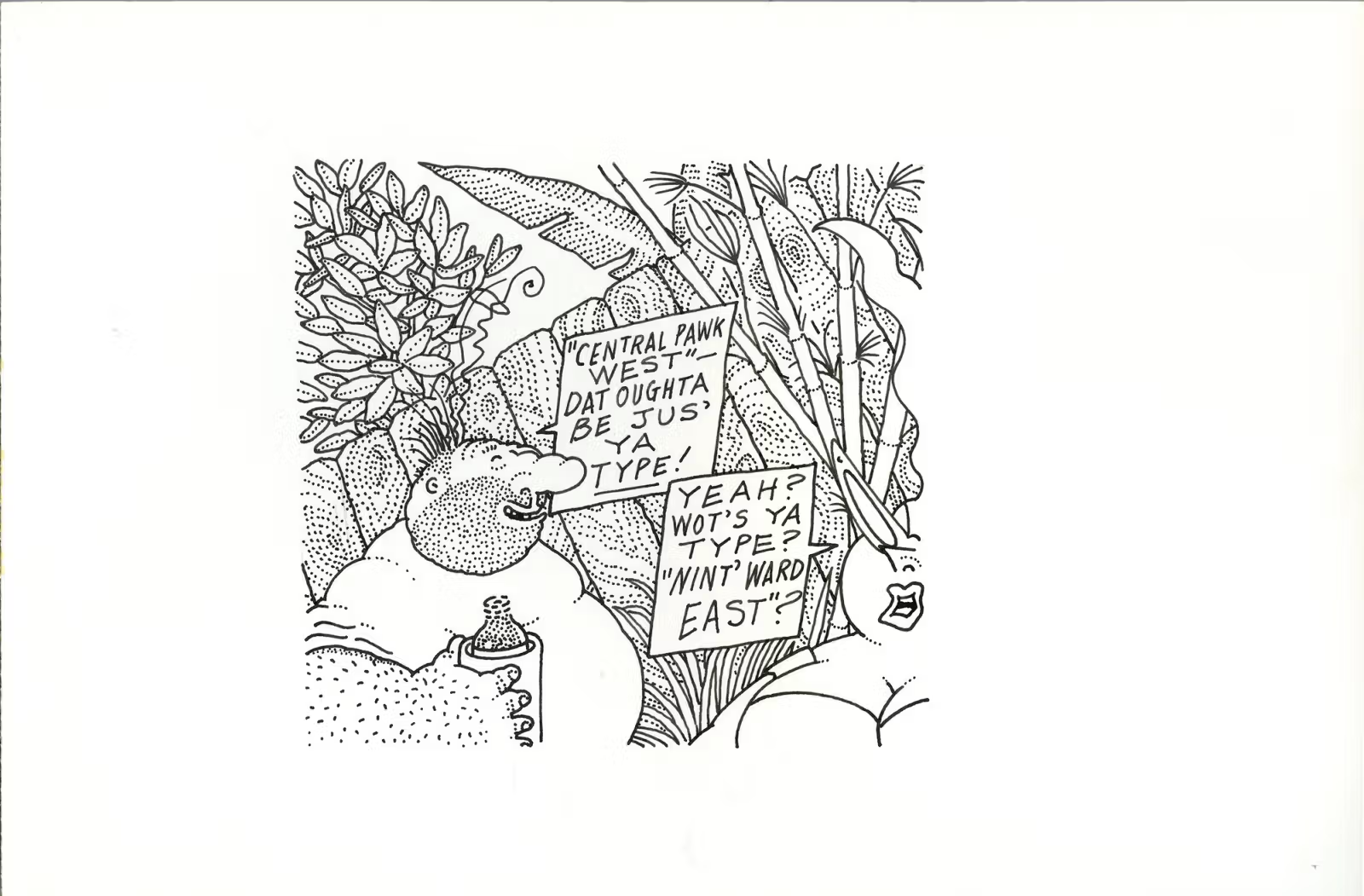
Bunny Matthews was one of New Orleans’ defining creative voices. He was a writer, illustrator, and cartoonist whose work captured the city’s language, humor, neighborhoods, and culture across decades.
The Bunny Matthews Archive was established as a New Orleans 501(c)(3) to preserve that body of work while extending Bunny’s commitment to creative expression through arts and music opportunities for young people.
Its ambition goes beyond preservation: a permanent digital archive, exhibitions, publications, educational resources, and an active role in New Orleans’ cultural life.
Between Projects helped translate that mission into a digital and archival system that can grow with it.
Challenge
An archive needs more than a website.
It needs a durable system of record.
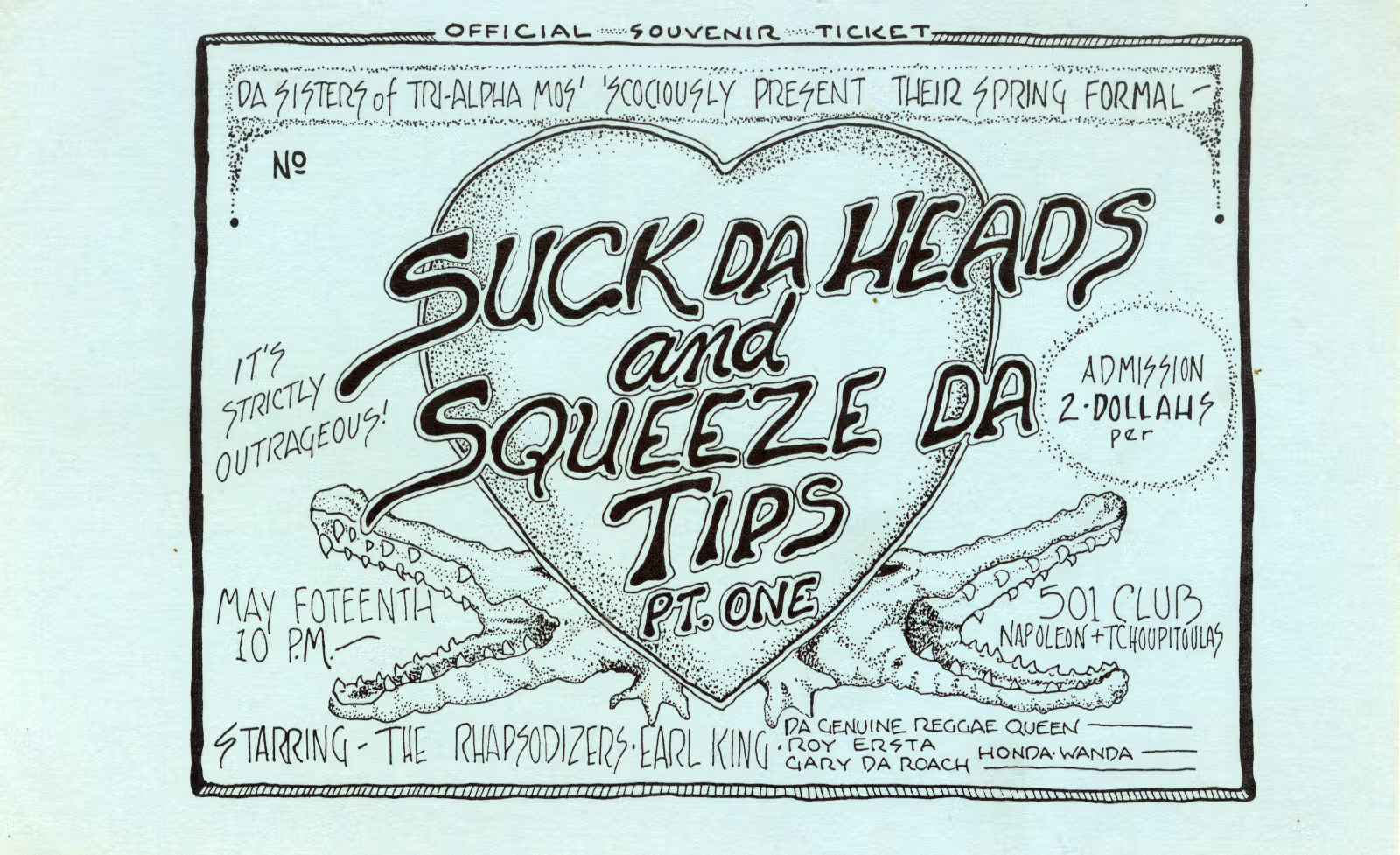
Bunny’s work exists across formats: original illustrations, published writing, recordings, correspondence, photographs, ephemera, and other cultural artifacts.
A conventional portfolio website could display some of that material beautifully, but it would not solve the underlying problem.
The Archive needed to know what every object was, how it related to the rest of the collection, how to describe it, how people would find it, and how that structure could survive thousands of future additions.
Before designing pages, we needed to design the archive.
Marketing Architecture
1. Studies
We began with the collection itself.
The early work focused on terminology, metadata, taxonomy, browse behavior, image readiness, editorial governance, and the relationship between the internal archival record and the public website.
A deceptively important decision emerged from that work:
Artifact would become the system’s primary object.
Illustrations, writings, photographs, correspondence, audio, and ephemera could all share one durable underlying model while retaining the metadata specific to each object.
That gave the project a stable foundation before designing the public interface.
Marketing Architecture
2. Blueprint
Build the archive around the artifact.
The content architecture established a canonical internal item number for every artifact while separating that archival identity from public-facing URLs.
Medium became the primary browse axis. Series became the second. The schema included tags, publications, dates, and additional relationships without overloading the first release.
The result was intentionally a lean v1: enough structure to be rigorous, but not so much complexity that cataloging became impossible.
More advanced filtering, year-based browsing, publication views, exhibitions, and additional relationships could be added later without rebuilding the foundation.
This was less a sitemap than an archival blueprint.
Marketing Architecture
3. Design / Build
Build a public archive on top of a durable information system.
The public experience and the underlying archive were developed as two sides of the same system.
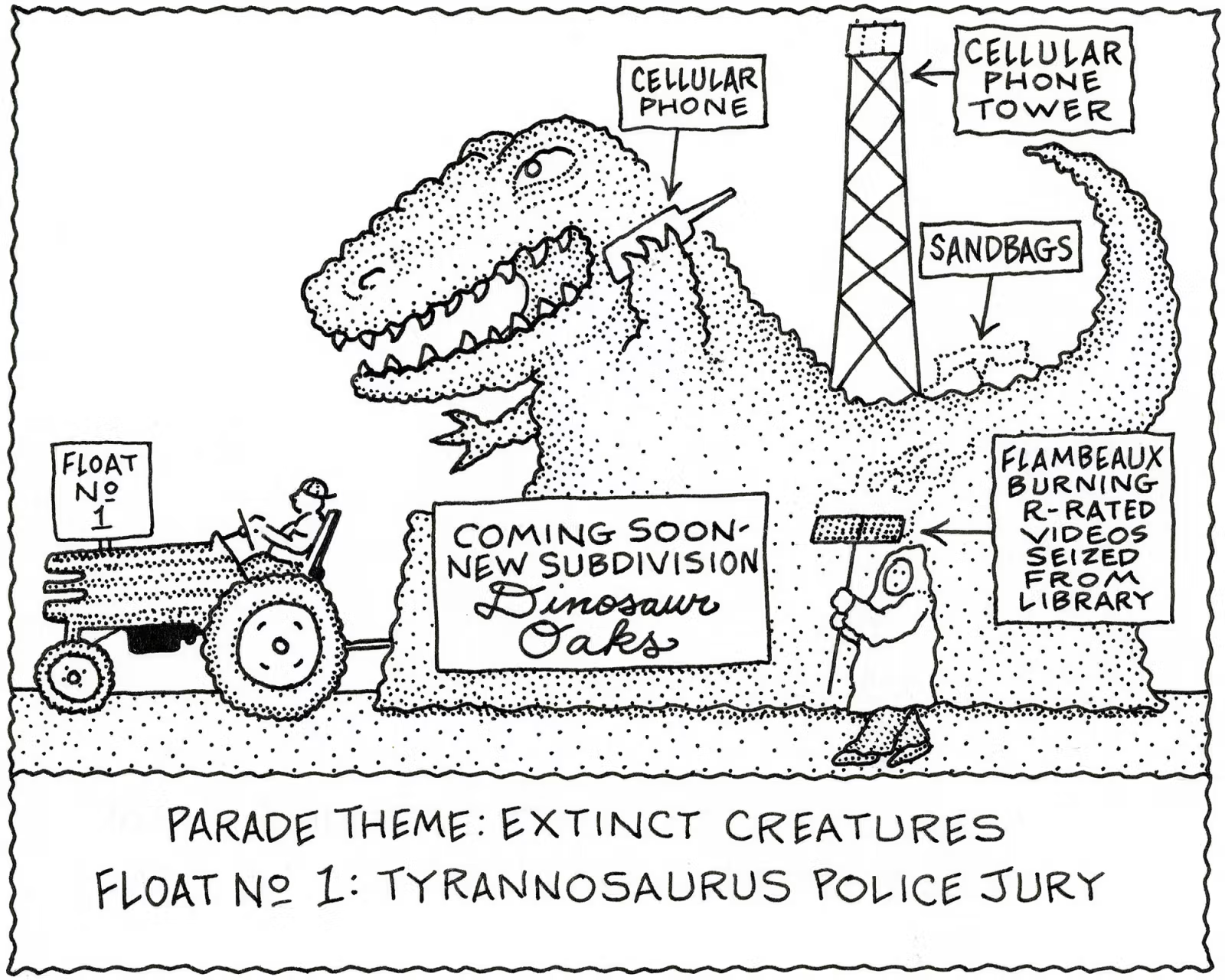
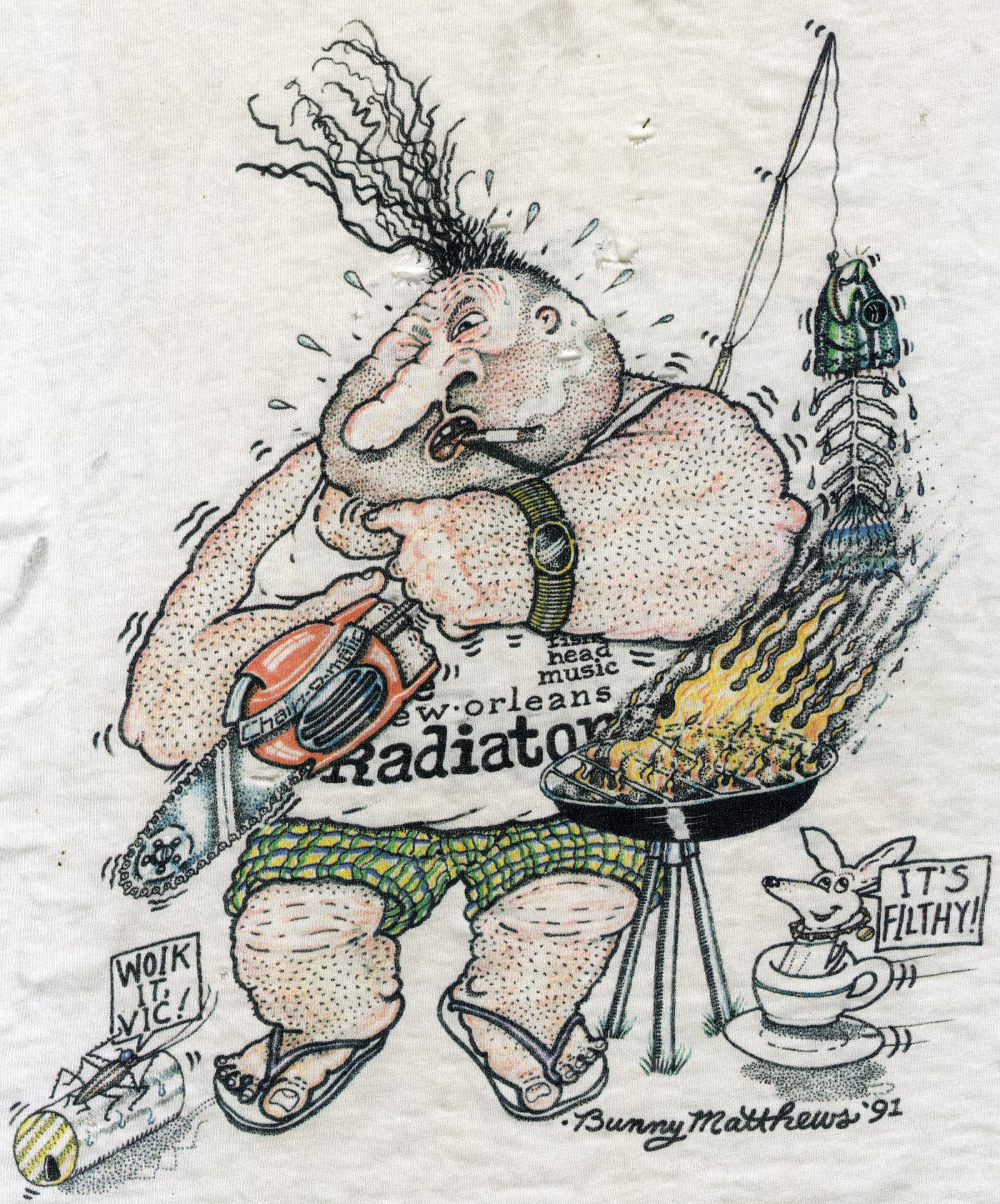
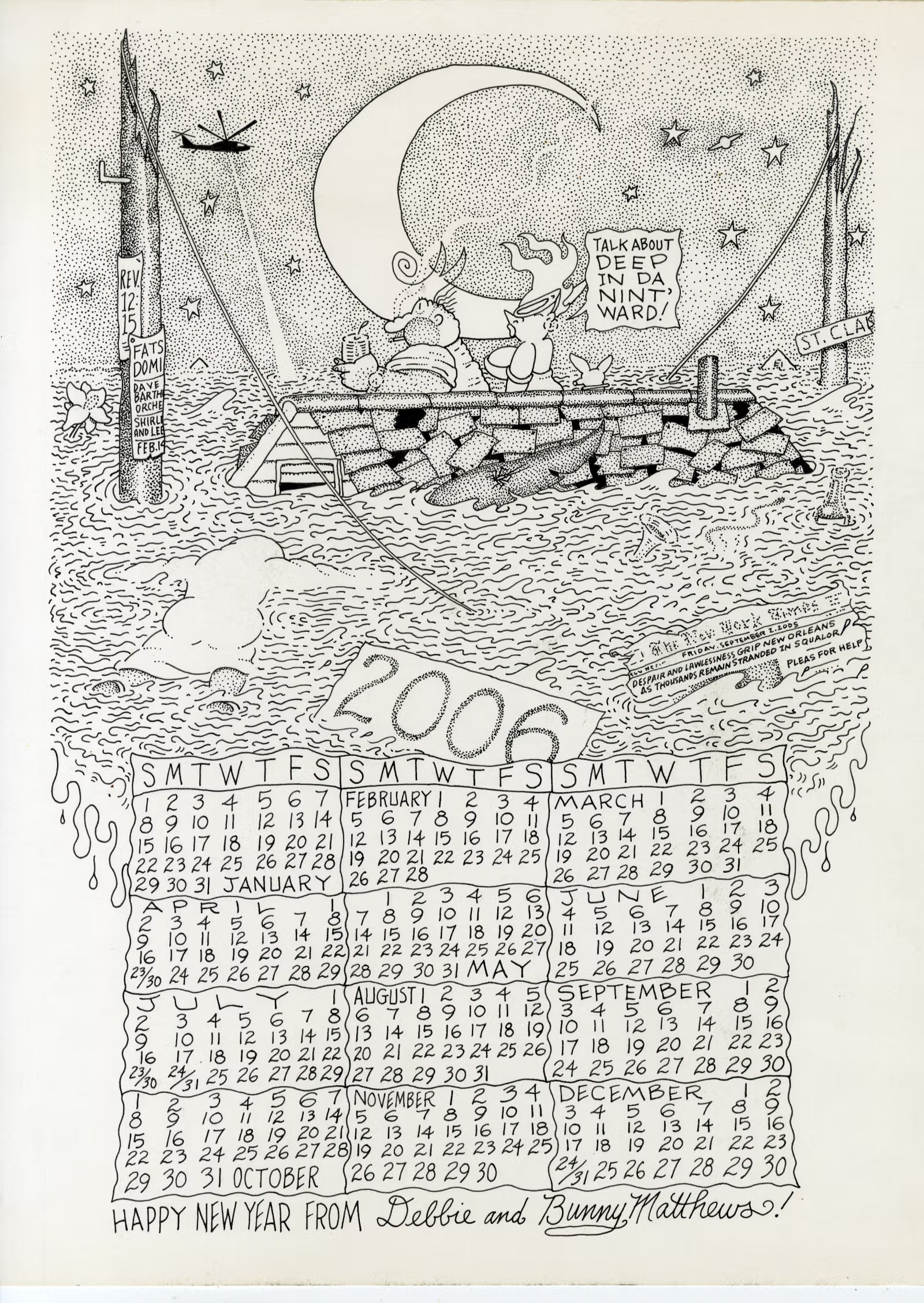
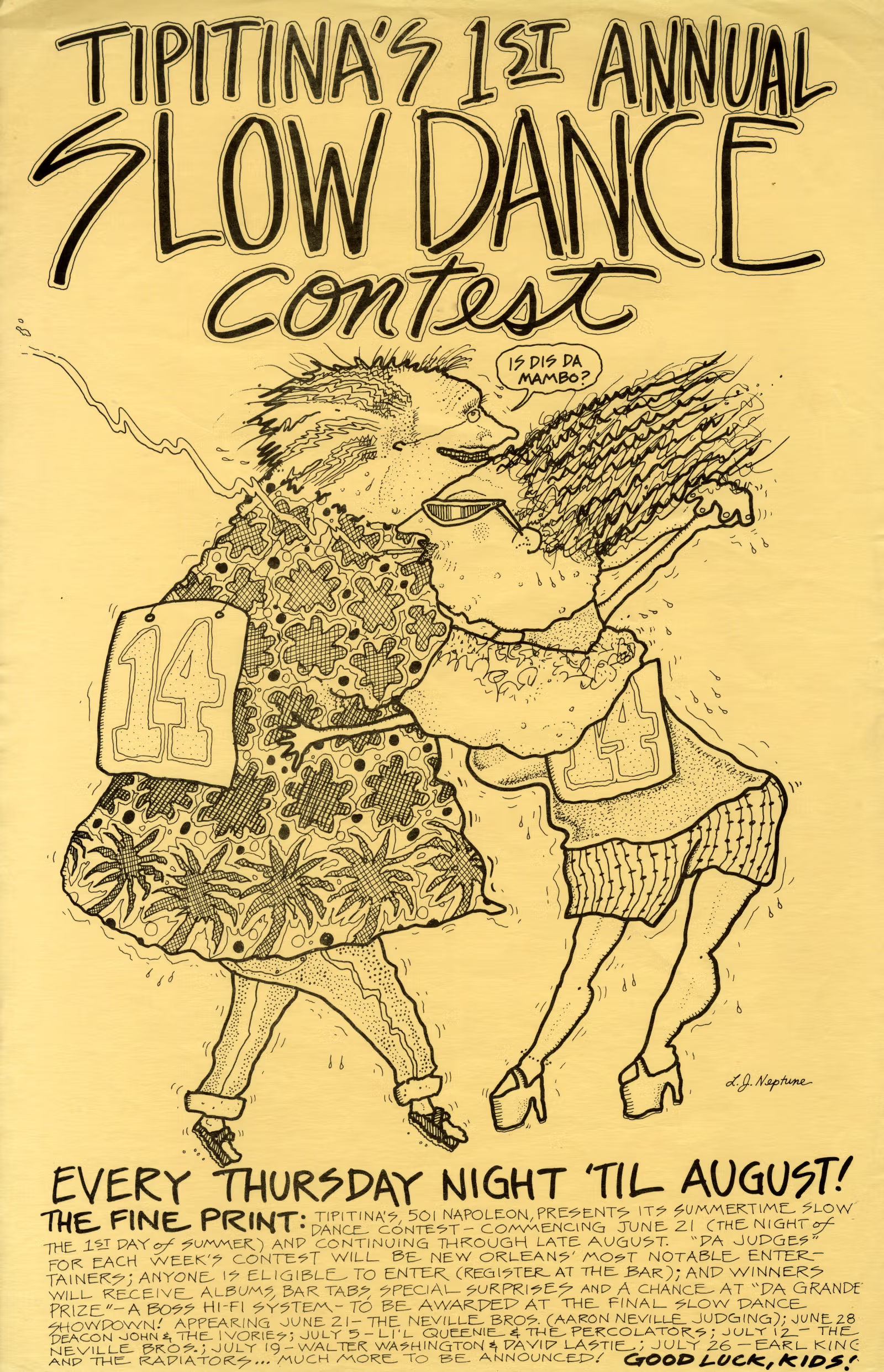
Sanity provides the structured editorial and archival environment. Astro provides a lightweight public presentation layer. Individual artifact pages give each object a durable public home, while browse views allow visitors to move through the archive by medium and series.
The interface was designed to remain secondary to the work itself.
Images, titles, dates, series, media, and contextual information are given enough structure to make the collection useful to researchers and casual visitors without turning Bunny’s work into a database interface.
The goal was not to impose a new visual identity over the collection.
It was to build a system that lets Bunny remain Bunny.
Marketing Architecture
4. Optimization
Design for stewardship, not launch day.
Archives are never finished.
The system treats cataloging and publication as an ongoing editorial practice. Controlled vocabularies limit taxonomy drift. Import rules normalize legacy data. Draft workflows support continued research. Content-readiness standards help ensure that incomplete records are not published simply to increase volume.
The architecture also leaves room for future capabilities: additional browse dimensions, deeper relationships between artifacts, exhibitions, publications, educational resources, and a much larger body of digitized work.
The platform can continue to grow because the underlying system was designed first.
Outcome
From a collection of materials to the beginnings of a living cultural institution.
The initial platform establishes a durable foundation for cataloging, preserving, and publishing Bunny Matthews’ work while giving the organization infrastructure it can expand for years.
What began as the need for a website became a larger archival system—one capable of supporting ongoing digitization, research, publishing, exhibitions, and public access.
The result supports the Archive’s larger ambition: not simply preserving Bunny’s legacy, but making that legacy permanently accessible and using it to support future generations of New Orleans creativity.